South African micro-businesses with annual turnover of up to R2.3 million should reassess whether Turnover Tax remains a suitable option for the 2026/27 year of assessment. The qualifying threshold increased from R1 million with effect from 1 April 2026, while the tax-free turnover band increased to R600 000.
The changes may bring more small businesses within the potential scope of the simplified regime. However, eligibility does not automatically make Turnover Tax the best choice. Businesses should compare the regime with ordinary income tax and consider their margins, expenses, ownership structure, income sources and VAT position.
What changed from 1 April 2026
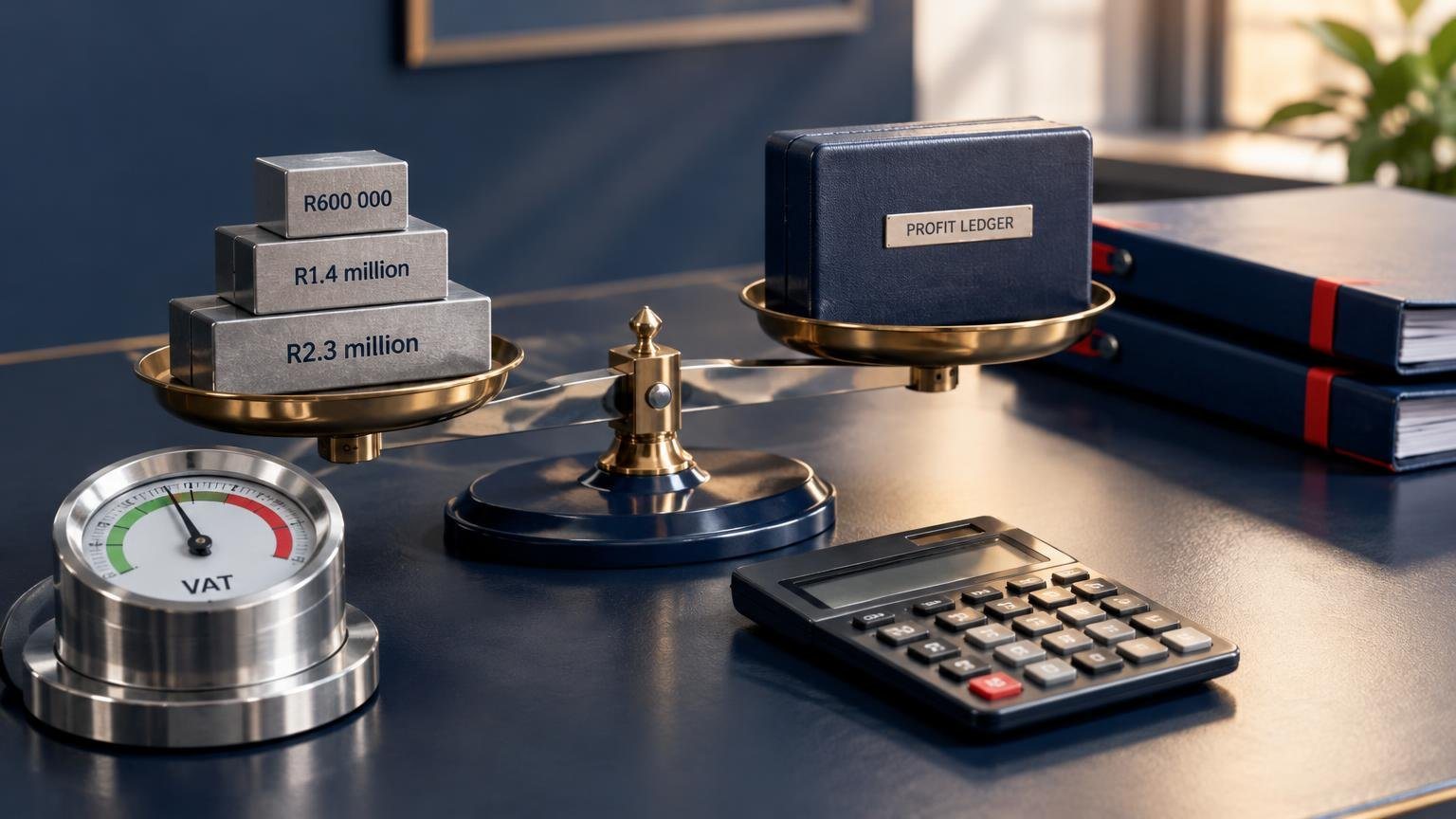
According to SARS guidance, the annual turnover limit for qualifying micro-businesses increased to R2.3 million. The applicable rates for the year of assessment ending between 1 March 2026 and 28 February 2027 are:
- R1 to R600 000: 0% of taxable turnover;
- R600 001 to R950 000: 1% above R600 000;
- R950 001 to R1.4 million: R3 500 plus 2% above R950 000; and
- R1.4 million to R2.3 million: R12 500 plus 3% above R1.4 million.
Turnover Tax is calculated on turnover rather than profit. It is intended to simplify compliance by replacing certain income-tax, provisional-tax, capital-gains-tax and dividends-tax obligations for qualifying micro-businesses. Registration remains voluntary.
Who should review their position
Sole proprietors, partnerships, close corporations, companies and co-operatives may potentially qualify, subject to the detailed statutory requirements. SARS notes that exclusions can apply where professional services or investment income make up too much of a business’s receipts, where ownership structures do not meet the rules, or where other disqualifying conditions apply.
A business with substantial operating costs should be particularly careful. Because Turnover Tax is based on sales and not taxable profit, a low-margin business may not benefit even if its turnover falls below R2.3 million. The business should also consider whether customers expect VAT invoices and whether input VAT recovery is important to its pricing model.
Turnover Tax and VAT are not the same decision
SARS confirms that Turnover Tax and VAT are separate systems. A business registered for Turnover Tax may still be VAT-registered in certain circumstances. Separately, the compulsory VAT-registration threshold increased to R2.3 million from 1 April 2026, while the voluntary-registration threshold increased to R120 000, subject to the applicable rules. Businesses should not assume that moving into or out of one regime automatically settles the other.
SARS’s comparison examples illustrate why businesses near either threshold should monitor rolling turnover and review their registration position before crossing a limit.
Practical checks for SMEs
- Reconcile sales records to bank receipts, invoices and accounting-system reports.
- Calculate qualifying turnover using the applicable SARS rules, rather than relying only on gross cash received.
- Review the percentage of receipts from professional services, investment income and rental activities.
- Model the tax outcome under Turnover Tax and ordinary income tax using realistic profit margins.
- Confirm whether VAT registration, PAYE, UIF and SDL obligations still apply.
- Keep written records of the decision and the supporting calculations.
Businesses considering a change should obtain appropriate tax advice before applying. YFP can assist with reviewing accounting records, comparing tax regimes and planning the related compliance work through its accounting and tax services.